How to Know If Your Solar System Is Underperforming
Is your solar system underperforming? Learn the common signs to watch for, from lower energy production to unexpected electricity bills.

Join Australia’s solar and battery revolution. Get A Free Quote

October 06, 2026
 Share
Share


Australia's rooftop solar story has entered a new phase.
Solar panels are no longer unusual on Australian rooftops. By the end of June 2026, around one in every 2.5 Australian homes had rooftop solar, according to the Clean Energy Council. During the first six months of 2026 alone, Australians installed approximately 180,878 new rooftop solar systems, adding 1.89 GW of capacity.
But there's an important question behind these impressive numbers:
As more Australian homes generate their own electricity, what does that actually mean for homeowners?
The answer is changing the way households need to think about solar power.
For many years, the basic solar conversation was simple:
Install panels → generate electricity → reduce your electricity bill.
Today, it's more complicated.
A modern household can generate solar electricity, use it directly, export excess power, store it in a battery, shift electricity consumption to the middle of the day, or potentially participate in a Virtual Power Plant (VPP).
This means the value of a solar system increasingly depends not only on how much electricity it produces, but on when and how that electricity is used.
The Australian Government notes that solar households remain connected to the grid and that electricity tariffs, usage charges and feed-in tariffs can all affect the financial value of a solar system.
Growth is significant.
The Clean Energy Council reports that 1.89 GW of rooftop solar was installed during January–June 2026, across more than 180,000 installations. Since January 2019, Australia has installed around 22 GW of rooftop solar capacity.
And solar isn't just growing among homeowners.
In 2025, solar PV accounted for 19.6% of Australia's total electricity generation, with rooftop solar contributing 12.2%. Overall renewable energy supplied 39.5% of Australia's electricity generation that year.
For homeowners, this growth has an important consequence:
The electricity market is becoming increasingly shaped by household-generated power.
One of the biggest changes homeowners need to understand is the value of excess solar.
When your panels produce more electricity than your home is using, the excess can be exported to the grid in exchange for a feed-in tariff, depending on your electricity plan.
But feed-in tariffs are generally much lower than the price households pay when purchasing electricity from the grid. The Australian Government therefore recommends maximizing solar self-consumption where possible.
That creates a simple opportunity:
Instead of:
Generate → Export → Buy electricity later
Homeowners can increasingly aim for:
Generate → Use → Store → Buy less from the grid
This is one reason battery storage is becoming increasingly important.
Australia isn't simply installing more solar.
It's installing more batteries at an extraordinary rate.
During the first half of 2026, 276,011 home batteries were installed, 52% more than during the preceding six months. The Clean Energy Council also reported that battery installations were occurring at a faster rate than rooftop solar installations during that period.
Why?
Because homeowners are increasingly looking beyond daytime solar generation.
Solar panels produce electricity when the sun shines.
But households often use significant amounts of electricity:
A battery can store some of the excess solar generated during the day and make it available later.
The Australian Government says batteries can increase solar self-consumption, reduce grid purchases and help households take advantage of time-of-use tariffs.
Another major development for Australian homeowners is the Cheaper Home Batteries Program.
Eligible households can currently receive a discount of around 30% on the upfront cost of eligible small-scale battery systems, subject to program requirements. The program covers eligible batteries connected to new or existing solar PV systems.
However, there's an important detail homeowners should know.
The discount isn't fixed forever.
From 1 May 2026, the program introduced changes to the Small-scale Technology Certificate calculations, with the support factor scheduled to decline over time through to 2030.
That means homeowners considering battery storage should look at the current rules and eligibility requirements, rather than relying on older rebate information.
More battery capacity might sound like a better solution.
But that's not necessarily the case.
The Australian Government specifically advises homeowners to choose a battery based on factors such as:
The Government also notes that bigger isn't always better.
A battery should therefore be matched to the home's actual energy profile not simply selected because it has the largest capacity.
Having solar doesn't mean you stop buying electricity from the grid.
Most solar homes remain connected to the electricity network, which means your electricity plan still matters.
Depending on your location and retailer, you may encounter:
Some plans may reward electricity use at times, while others may have different rates for solar exports.
The Australian Government recommends comparing the whole electricity plan, rather than simply choosing the retailer offering the highest feed-in tariff.
Here's an easy change homeowners can make.
Instead of exporting all your excess solar, consider shifting some electricity usage into daylight hours.
For example:
Run during solar production:
This can increase your solar self-consumption and reduce the amount of electricity you need to purchase later.
The Australian Government specifically recommends shifting suitable electricity use into the middle of the day to make better use of excess solar.
An interesting example of this changing market is the Solar Sharer Offer, introduced in July 2026.
Eligible households in NSW, South Australia and South East Queensland with smart meters can access three hours of free electricity during the middle of the day, when solar generation is abundant.
The specific offer isn't available to every Australian household, but it highlights a broader change:
Electricity consumption is increasingly being encouraged to move toward the hours when solar generation is highest.
The next stage isn't simply about individual solar panels and batteries.
It's about making household energy assets work more intelligently.
The Clean Energy Council says Virtual Power Plants, flexible tariffs and emerging flexibility markets could create additional value for households by helping manage peak demand and absorb excess solar generation.
This could mean that, in the future, a home battery isn't just something that stores electricity for one household.
It could also become part of a larger energy network.
The solar market is moving from a simple generate electricity model toward a more connected generate, use, store and manage electricity model.
For homeowners, that means considering more than just panel capacity.
Before investing in or upgrading a system, consider:
Solar generation
How much electricity can your roof produce?
Household consumption
When does your home actually use the most electricity?
Battery storage
Would storing excess solar help increase your self-consumption?
Electricity tariff
How much are you paying for grid electricity and receiving exports?
Energy management
Can you shift some electricity usage into solar-generation hours?
Future energy needs
Could an EV, heat pump or other electric appliances change your consumption?

Australia's rooftop solar market is growing rapidly, but the next chapter is about how homeowners use the energy they generate.
With rooftop solar installations accelerating, battery adoption reaching record levels and electricity plans increasingly responding to daytime solar generation, Australian households have more options than ever to manage their energy.
The goal isn't necessarily to generate the most solar.
It's to build an energy system that makes sense for your home, your usage, and your future needs.
Reach Out to SunSelect at 1300 867 353 for Expert Guidance and Money-Saving Options. Explore the Reviews from Our Delighted Customers on ProductReview.com.au.
Make the smart move to energy independence with our solar batteries
Ask Our Battery Expert

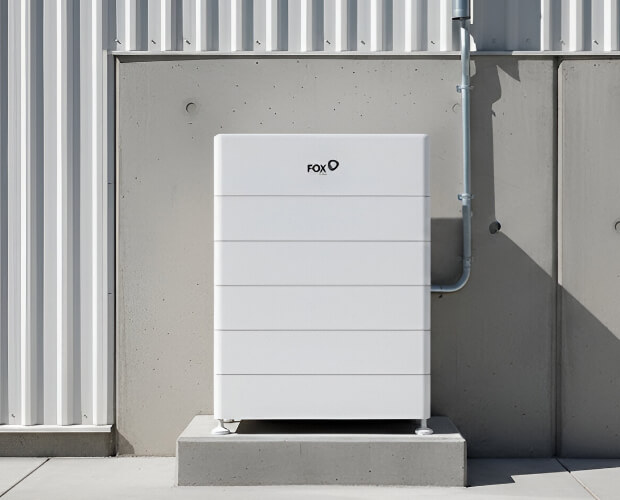
Store your excess solar energy, cut peak rates, and protect your home from outages.
Get a free quote tailored to your location
100% Free Quote. No Obligation.
We respect your privacy.

Enter your postcode to see available offers in your area.



NSW Home Energy Saver Loan Program
Available from 17 June 2026