Australia Battery Rebate : Act Before January
Australia's home battery rebate is stepping down in January 2027. Learn how the changes affect homeowners and what to check before installing a battery.

Join Australia’s solar and battery revolution. Get A Free Quote
November 16, 2026
 Share


Imagine generating enough solar electricity during the day to run your household, store excess energy in a battery, and use it throughout the night without relying heavily on the electricity grid.
Sounds ideal, doesn't it?
For many Australian homeowners, this is one of the biggest reasons to consider installing a home battery alongside their solar panels.
But here's the question: Can one home battery power your entire house overnight?
The answer is yes; it can be possible. However, it depends on several important factors, including battery capacity, household electricity consumption, appliance usage, and the amount of solar energy available to charge the battery during the day.
A battery that works perfectly for one household may not be sufficient for another.
Let's understand what determines whether a single home battery can keep your household running after sunset.
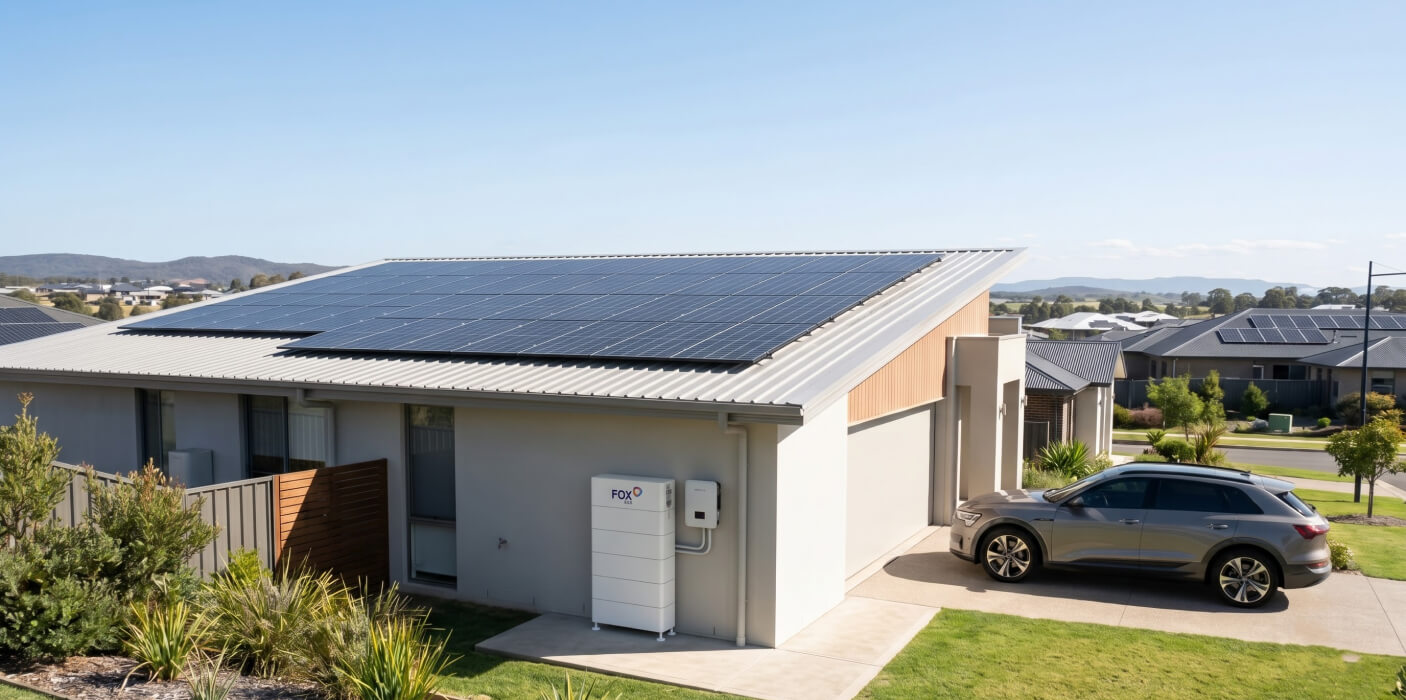
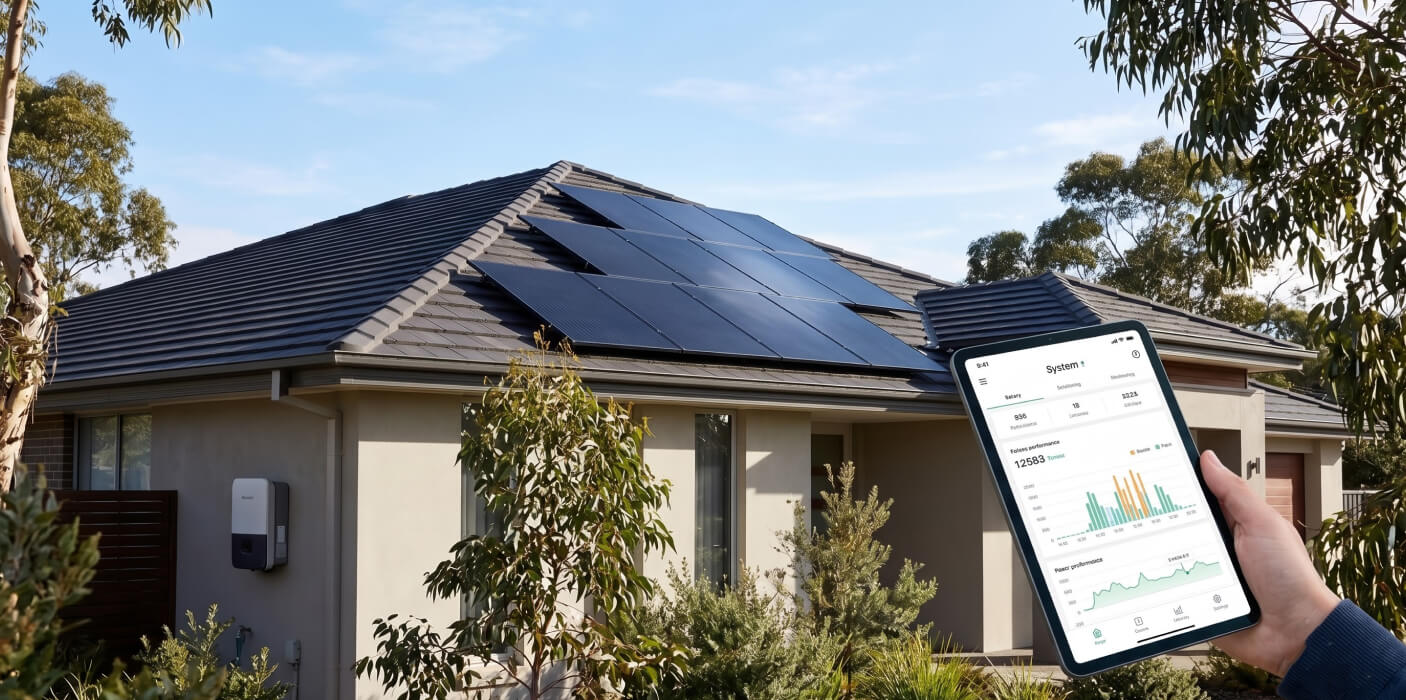
Solar panels generate electricity during daylight hours. When your home produces more electricity than it currently needs, excess energy can be stored in a compatible home battery.
Once solar production decreases or stops after sunset, the battery can discharge its stored electricity to supply your household.
The process is relatively straightforward:
During the day:
During the night:
This allows homeowners to make better use of the electricity their solar panels generate rather than purchasing as much electricity from the grid later.
This is where things become important.
Home batteries are measured in kilowatt hours (kWh), which indicates how much energy they can store.
However, the right battery size isn't determined by the number of bedrooms or people living in your home alone. It depends on how much electricity your household actually consumes overnight.
For example:
| Battery Capacity | Potential Use |
|---|---|
| 5 kWh | Smaller overnight energy requirements |
| 10 kWh | Moderate household energy requirements |
| 15 kWh | Higher overnight electricity consumption |
| 20 kWh or more | Larger energy requirements or greater storage needs |
These are illustrative capacity categories, not guaranteed household coverage. Actual usable energy depends on battery specifications, operating settings, and system efficiency.
According to the Australian Government's energy.gov.au guidance, typical household batteries range from approximately 4 kWh to 14 kWh, although larger systems are also available.
One important detail: nominal capacity and usable capacity aren't always the same. A battery's usable capacity is the amount of stored electricity that can be discharged for household use.
This is why checking the usable capacity is essential when comparing battery systems.
The answer depends on how much electricity your appliances consume and how long you operate them.
Some appliances use relatively little electricity, while others can place a significant demand on your battery.
Here's a general comparison:
| Household Appliance | Typical Energy Demand |
|---|---|
| LED lighting | Low |
| Wi-Fi router | Low |
| Television | Low to moderate |
| Refrigerator | Variable, cycles throughout the day |
| Ceiling fans | Relatively low |
| Laptop and phone charging | Low |
| Washing machine | Varies by cycle |
| Dishwasher | Moderate, varies by programme |
| Air conditioner | Moderate to high |
| Electric oven | High during operation |
| Electric water heater | Potentially high |
Actual consumption varies depending on appliance size, efficiency, operating conditions, and usage time.
For example, running a few lights, a refrigerator, a television and internet equipment generally places a much smaller demand on a battery than running multiple air conditioners, an electric oven and other high-power appliances simultaneously.
This is one of the most common questions Australian homeowners have, particularly during warmer months.
Air conditioning can be one of the biggest contributors to household electricity consumption.
A battery may run an air conditioner overnight, but the result depends on:
For example, consider a battery with 10 kWh of usable energy.
If the air conditioner and other household appliances collectively consume an average of 1 kW, that represents approximately 10 hours of energy demand before allowing for additional system losses or reserve settings.
If the combined average demand increases to 2 kW, the same stored energy will last approximately five hours.
This is a simplified illustration, not guaranteed runtime.
For Australian households that regularly use air conditioning overnight, battery sizing should account for cooling requirements rather than relying only on average daily electricity consumption.
A common mistake when comparing home batteries is focusing only on their storage capacity.
Two important specifications determine how a battery performs:
Battery capacity (kWh)
This tells you how much energy the battery can store and deliver over time.
Battery power output (kW)
This tells you how much electricity the battery can supply at a particular moment.
Think of it this way:
For example, a battery may have enough stored energy to power your home throughout the night, but its inverter may not support several high-power appliances running together.
Both specifications matter when selecting a suitable battery system.
Even a fully charged battery can run out of stored energy before sunrise if household consumption is higher than expected.
When this happens, a grid-connected system can generally draw electricity from the electricity network to meet the remaining household demand.
This is why battery systems should be designed around realistic energy consumption rather than the assumption that every appliance will run entirely on stored solar electricity.
Homeowners can also improve battery usage by:
These small adjustments can help make stored solar energy last longer.
Here's something homeowners should not overlook.
Having a home battery does not automatically mean your entire house will have electricity during a blackout.
Standard grid-connected solar systems are generally designed to shut down when the electricity grid fails, even if solar panels are installed.
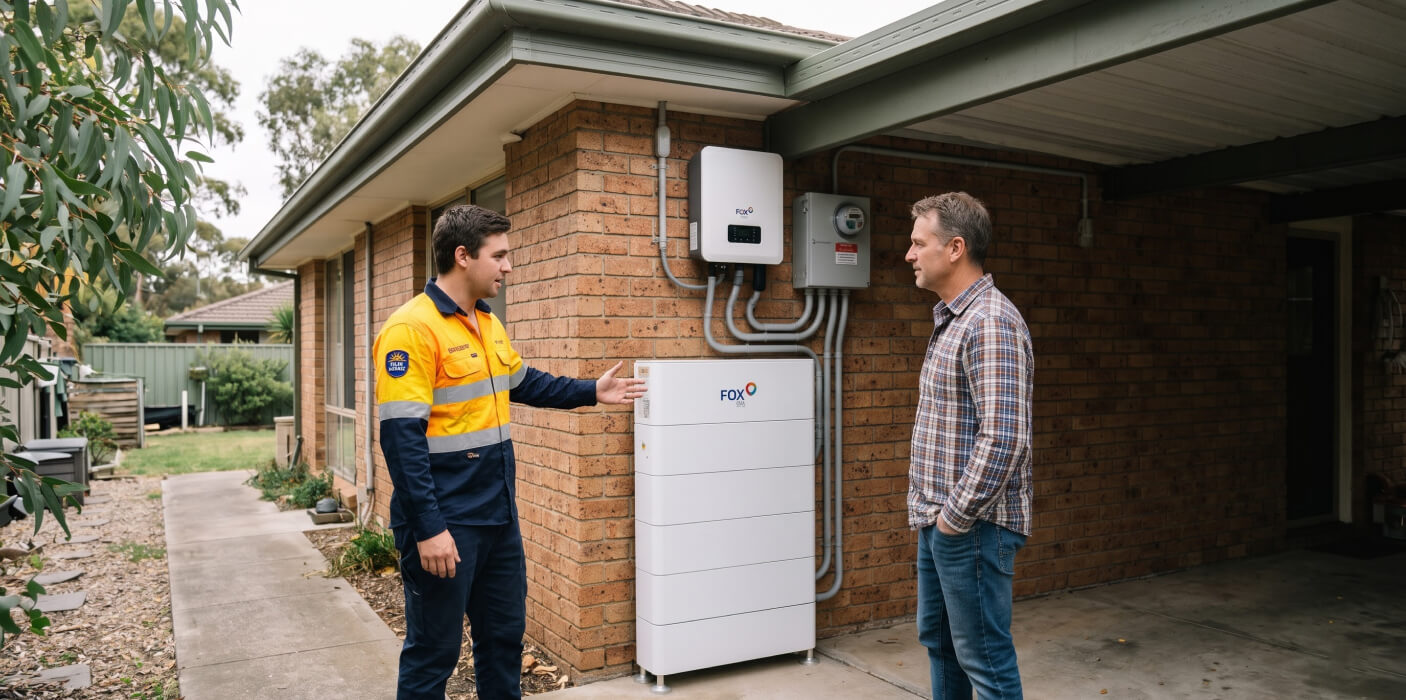
To provide backup power, the battery system needs the appropriate backup functionality, inverter configuration, isolation equipment, and electrical installation.
There are generally two backup approaches:
| Backup Type | What It Supports |
|---|---|
| Essential-load backup | Selected circuits, such as lighting, refrigeration, and internet equipment. |
| Whole-home backup | A wider range of household circuits, subject to battery and inverter capacity. |
Whole-home backup may require a higher power output and sufficient storage capacity to support larger appliances.
Some systems also have limitations around three-phase supplies, so homeowners should confirm exactly which circuits and phases will receive backup power.
If blackout protection is important, discuss this requirement with your installer before purchasing a battery.
Choosing a home battery means understanding more than just its storage capacity.
At Solar Secure, we help Australian homeowners explore solar and battery solutions suited to their household energy requirements.
Whether you're upgrading an existing solar system or planning a new installation, choosing the right configuration can make a difference to how effectively you use your energy.
A professional assessment can help determine the storage capacity your home actually needs.

So, can one home battery power your entire house overnight?
Yes, provided it has sufficient usable capacity and power output to meet your household's energy needs.
While one battery may be enough for some homes, households with higher electricity consumption may require additional storage or better energy management.
The best battery isn't necessarily the biggest one. It's the one that delivers the right amount of energy when your home needs it most.
Reach Out to SunSelect at 1300 867 353 for Expert Guidance and Money-Saving Options. Explore the Reviews from Our Delighted Customers on ProductReview.com.au.
Make the smart move to energy independence with our solar batteries
Ask Our Battery Expert

Store your excess solar energy, cut peak rates, and protect your home from outages.
Get a free quote tailored to your location
100% Free Quote. No Obligation.
We respect your privacy.

Enter your postcode to see available offers in your area.



NSW Home Energy Saver Loan Program
Available from 17 June 2026