How to Know If Your Solar System Is Underperforming
Is your solar system underperforming? Learn the common signs to watch for, from lower energy production to unexpected electricity bills.

Join Australia’s solar and battery revolution. Get A Free Quote
December 13, 2025
 Share
Share


If you have glanced at your electricity bill lately, you might have noticed a frustrating trend: the credit you receive for sending your excess solar power back to the grid - your feed-in tariff (FIT) - is shrinking rapidly.
For many Australian households, this feels like a penalty for doing the right thing. You invested in solar to save money and help the environment, but now the energy retailers seem to be moving the goalposts. Gone are the golden days of 60c or even 20c feed-in tariffs. In 2025, benchmarks in states like New South Wales and Victoria have hovered between 3.3c and 7.3c per kWh. In some cases, during the middle of the day, the value of exported solar drops to near zero.
This phenomenon, often dubbed solar tax or sun tax in the media, has left many homeowners asking: Is my solar investment still worth it?
The short answer is yes, absolutely. But the way you use your solar system needs to change. The financial logic of solar has flipped. It is no longer about selling power to the grid; it is about keeping it for yourself.
To understand why feed-in tariffs are crashing, you have to look at the grid from a bird’s eyes view. Australia is a world leader in rooftop solar, with over 3.5 million homes generating power.
Between 10:00 AM and 2:00 PM, when the sun is high, millions of systems flood the grid with cheap, clean electricity. The supply is massive, but demand is often low because most people are at work or school. This creates a glut of energy that drives the wholesale price of electricity into the floor - sometimes even into negative territory.
Energy retailers simply don't need your power at noon, so they aren't willing to pay you for it. However, as soon as the sun sets and everyone comes home to cook dinner and turn on the TV, solar generation vanishes and demands spikes. This is when the grid has to rely on expensive gas or coal Peaker plants, sending the price of electricity skyrocketing.
The New Math: The Arbitrage Opportunity
This price disparity creates a massive financial gap - and your opportunity.
Every kilowatt-hour (kWh) of energy you export for a measly 4c is a kilowatt-hour you will likely have to buy back tonight for 30c, 40c, or more.
If you export 20 kWh of excess solar during the day, you might earn roughly 80 cents. If you then buy that same 20 kWh back from the grid at night to run your air conditioner and appliances, it could cost you $7.00.
You are essentially selling your gold for the price of copper, then buying it back at gold prices a few hours later. This is where a solar battery transforms your system. By storing that excess energy instead of exporting it, you bridge the gap. You keep your gold and use it when it’s most valuable.
Let’s look at a hypothetical scenario to see how this plays out in the real world.
The Smith family lives in Sydney. They have a standard 6.6kW solar system but no battery.
Earnings: 25 kWh x $0.05 = $1.25 credit.
Cost: 15 kWh x $0.35 = $5.25.
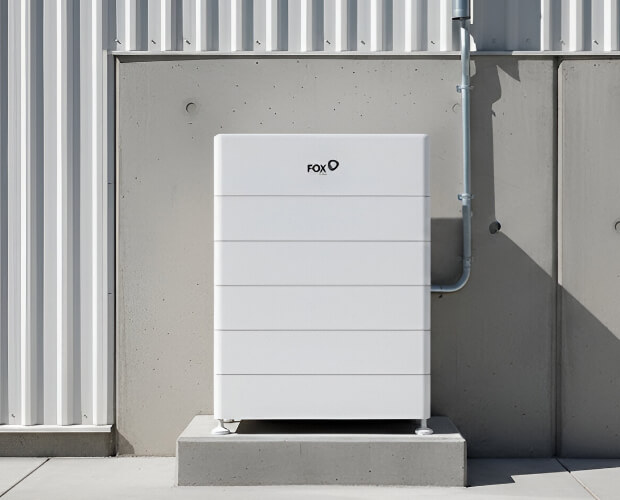
Now, add a 10kWh Neovolt Battery from Sun Select.
Earnings: 15 kWh x $0.05 = $0.75 credit.
Cost: 5 kWh x $0.35 = $1.75.
The Difference: By adding a battery, the Smiths save $3.00 per day in this scenario. Over a year, that is over $1,000 in savings just from self-consumption, not counting the value of backup power or virtual power plant (VPP) incentives.
At Sun Select, we don't just install any battery. We specifically recommend the Neovolt system because its specifications align perfectly with the harsh realities of the Australian climate and market.
Here is the technical deep dive on why we trust this hardware:
Beyond pure financial math, there is an intangible value to owning a battery: security.
Standard grid-tied solar inverters shut down during a blackout. This is a safety requirement to protect line workers fixing the poles. It means that even if it is a sunny day, if the grid goes down, your house goes dark.
With a properly configured battery system from Sun Select, you gain independence. When the neighborhood goes dark during a storm or grid failure, your system can isolate itself from the grid and keep your essential circuits running. Your fridge stays cold, your Wi-Fi stays on, and your lights keep shining. In an era of increasingly unpredictable weather, this peace of mind is priceless.
Right now, the financial case for batteries is being artificially sweetened by government policy. Regulators know that batteries help stabilize the grid, so they are offering massive incentives to get them into homes.
Currently, depending on your location and eligibility, there are up to $17,500 in battery incentives available. These schemes are designed to lower the upfront cost, making the return on investment (ROI) faster than ever before. However, like the generous solar feed-in tariffs of the past, these incentives will not last forever. As battery adoption hits critical mass, these rebates will likely be scaled back.
The era of passive solar ownership is ending. It is no longer enough to just put panels on the roof and forget about them. To make the numbers work in 2025, you need to be smart about storage.
By adding a battery, you stop renting energy from the retailer at a 600% markup. You become your own power station.
Sun Select is a NETCC Approved Seller with a team of SAA Accredited Installers. We pride ourselves on No Compromise quality, local warranties, and fast, professional installation. We can assess your current solar generation and help you calculate exactly how much a battery could save you based on your specific bill.
Yes. It is now cheaper to store your free solar power for night-time use than to sell it for 4c and buy it back for 35c+.
Yes. We can retrofit a battery to almost any existing solar system using AC Coupling, regardless of who installed the original panels.
They are rated for 8,000 cycles, meaning if you use it daily, it is designed to last over 20 years thanks to durable LFP technology.
Yes. Unlike standard solar inverters, our battery systems can keep essential appliances like fridges and lights running during a power outage.
Yes, currently up to $17,500 incentives are available depending on your location to help cover the upfront cost.
A single 10.1 kWh unit fits most average homes, but the system is modular and can be expanded if you have higher needs (like an EV or pool).
Reach Out to SunSelect at 1300 867 353 for Expert Guidance and Money-Saving Options. Explore the Reviews from Our Delighted Customers on ProductReview.com.au.
Make the smart move to energy independence with our solar batteries
Ask Our Battery Expert

Store your excess solar energy, cut peak rates, and protect your home from outages.
Get a free quote tailored to your location
100% Free Quote. No Obligation.
We respect your privacy.

Enter your postcode to see available offers in your area.



NSW Home Energy Saver Loan Program
Available from 17 June 2026